Discussion about health in Somalia often focuses on major hospitals and medical emergencies. Yet community health begins with essential services that people can access regularly: care for pregnant women and newborns, childhood immunisation, nutrition screening, early detection of illness, and information about safe water and hygiene.
Immunisation illustrates the importance of consistent services. WHO and UNICEF estimates released in July 2025 indicated that 70 per cent of children in Somalia were fully vaccinated in 2024. This represents progress, while also reminding us that many children still need access to the full schedule of recommended vaccines. Children in remote areas, displaced families and households with limited contact with health facilities may need outreach services.
In April 2026, Somalia launched its Community Health Strategy 2025–2029. The strategy gives priority to primary health care, maternal and newborn services, early detection and treatment of childhood illness, nutrition, immunisation and community-based disease surveillance. It underlines that health systems cannot be built through occasional campaigns alone. They require trained workers, reliable supplies, dependable information and strong links with communities.
Communities are essential partners in making health services work. Parents need clear and accurate information to make informed decisions, while health facilities should treat people respectfully and communicate in language they understand. Local knowledge, language and family circumstances should inform service planning, while clinical decisions must remain grounded in qualified professional advice and medical evidence.
Good health depends on a system that works every day, not only when an emergency occurs.
What makes primary health care effective?
A well-built health facility alone cannot guarantee reliable care. Services also need staff who are present, essential medicines and supplies, water and electricity, referral arrangements and transport for people who need advanced treatment. Pregnant women need appropriate follow-up; young children need monitoring of growth, nutrition and immunisation. When a facility cannot manage a condition, there should be a clear route to a suitable service.
Somalia’s Community Health Strategy 2025–2029 emphasises community health workers and stronger links between community services and primary health facilities. These workers can help people access accurate information, keep appointments and seek care early. Community health also depends on safe water, sanitation, nutrition and disease information. Families should understand the care being offered and how to raise concerns, while their personal health information must be handled confidentially and respectfully.
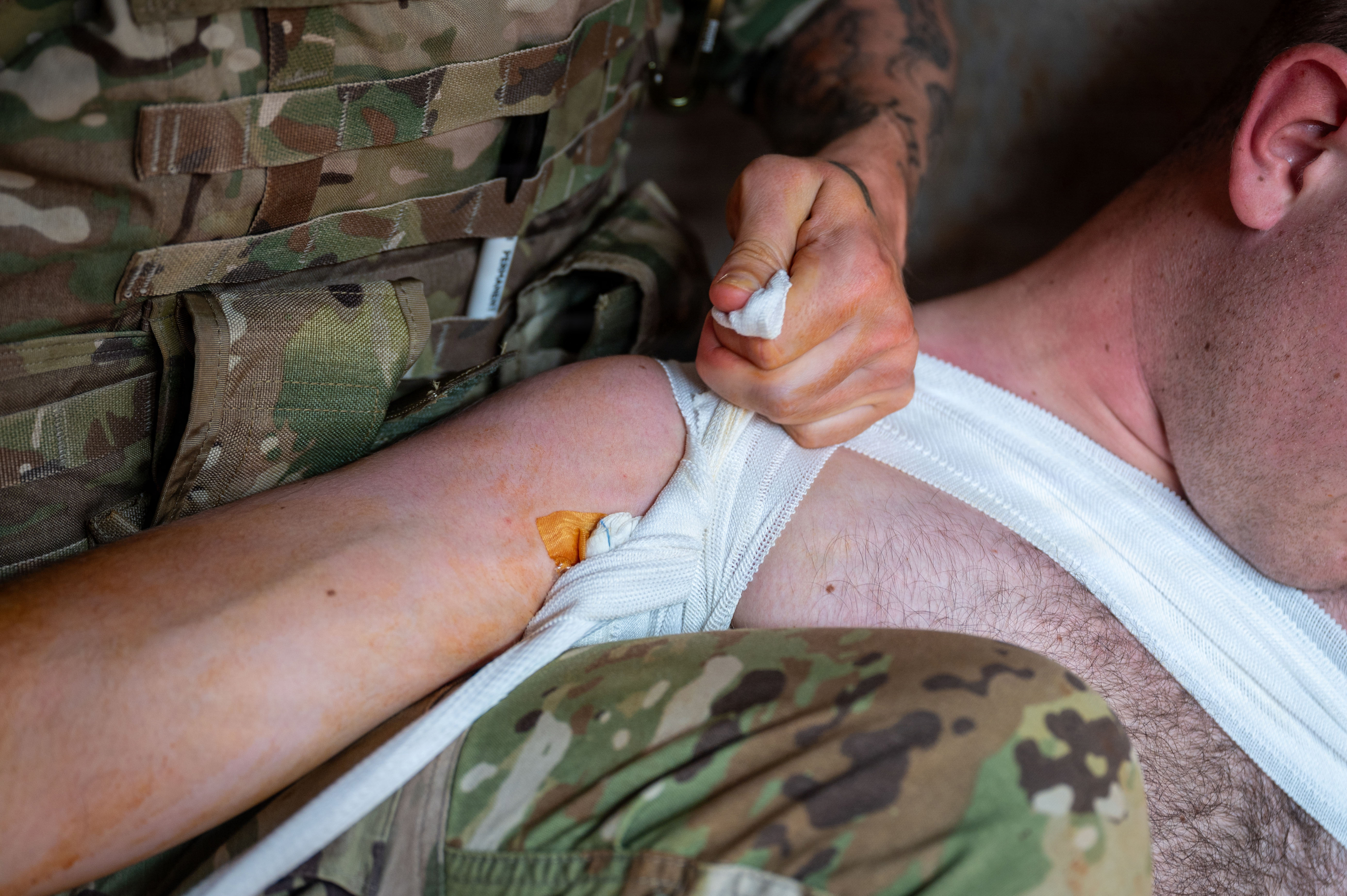
Image: Medical training in Kismayo, August 2026. Photo: US Air Force; a US government work in the public domain. Image source · Image licence.
Care for mothers, newborns and children
Community health begins with prevention and regular follow-up. Antenatal care, information about danger signs, delivery attended by skilled personnel, postnatal care and newborn checks can reduce many risks. Mothers should know where services are available and how to reach a higher-level facility when referral is needed. Distance, cost, transport and the availability of night-time services can all influence whether a family seeks care.
Immunisation is an essential part of child health. WHO and UNICEF estimates released in July 2025 reported that 70 per cent of children in Somalia were fully vaccinated in 2024. This is progress, but it also means that many children still need to be reached or complete their schedules. Vaccination cards, reliable clinic schedules and outreach to nomadic and displaced communities all matter.
Nutrition, water and sanitation
Children’s health depends on more than medicine. Adequate nutrition, safe water, functioning toilets, handwashing and safe food storage help reduce diarrhoeal disease and other infections. When a child becomes ill, early recognition of dehydration, malnutrition or other danger signs is important, and qualified health workers should provide medical advice. Families need clear information about nutrition and available services without being blamed for poverty or gaps in service provision.
Disease prevention and community information
Somalia’s Community Health Strategy 2025–2029 emphasises maternal and newborn care, early detection and treatment of childhood illnesses, nutrition, immunisation and community-based disease surveillance. Community health workers can help health messages reach households, refer patients to appropriate facilities and identify disease alerts earlier. Health information should be collected responsibly and patient confidentiality protected.
WHO’s Public Health Situation Analysis for Somalia, published in March 2026, described outbreaks including acute watery diarrhoea/cholera, diphtheria and measles. This illustrates why surveillance and coordinated health responses are important. Effective responses require supplies, laboratories, transport, trained workers, reliable data and cooperation between health facilities, authorities and communities.
What people should expect from a good health system
People seeking care should receive an understandable explanation of their condition, proposed treatment, any costs and where to ask questions. Facilities should treat patients respectfully and be accessible to people with disabilities, older people, women and households in remote areas. Quality health care is not just a building; it is skilled staff, medicines, information, respect and a system that follows patients through the care they need.
Sources and further reading
- UNICEF Somalia – Child immunisation data, 15 July 2025
- UNICEF Somalia – Community Health Strategy 2025–2029, 6 April 2026
- UNICEF Somalia – Community Health Strategy 2025–2029, launched April 2026
- WHO – Public Health Situation Analysis: Somalia, March 2026
- WHO/UNICEF – Somalia child immunisation estimates, July 2025


